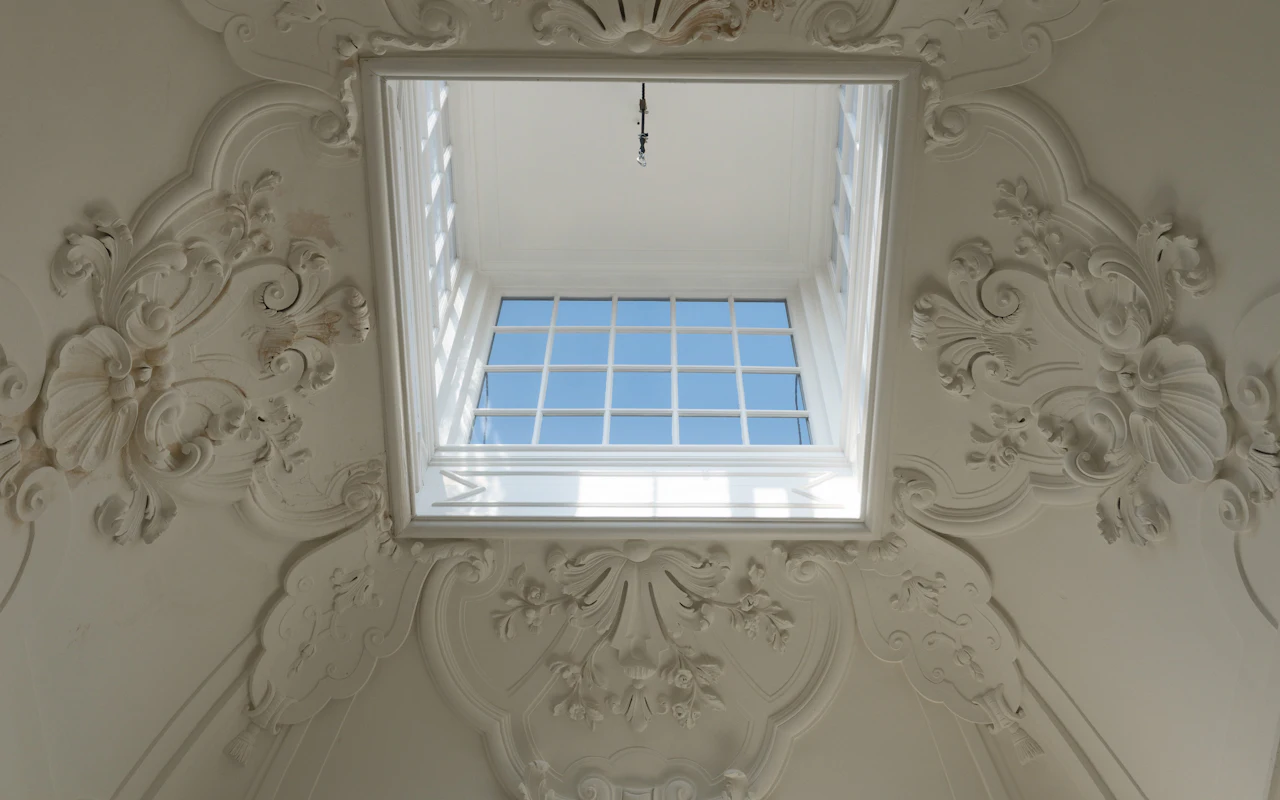
Most people picture the difference as one of style. Conservatories are the white plastic boxes on the back of semis; orangeries are the grand brick rooms with stone columns you see at stately homes. That picture is not wrong, but it hides the part that matters for your wallet and your paperwork: how much of the room is solid, and especially how much of the roof.
What actually separates the two
There is no legal definition of an orangery in the building rules. Builders and brochures use the word for a garden room that sits between a conservatory and a proper extension.
In practice, the differences tend to look like this.
| Conservatory | Orangery | |
|---|---|---|
| Walls | Mostly glazed, often on a low brick base | More brick or block, with large windows |
| Roof | Glass or polycarbonate over most of it | Mostly solid, often with a glazed lantern |
| Ceiling inside | The underside of the roof panels | A flat plastered perimeter around the lantern |
| Feel | Bright, close to the garden | More like a room of the house |
Treat that table as a sketch, not a definition. Plenty of rooms sit somewhere in between, and that grey area is exactly where people replacing a roof end up.
Why the roof decides how the room behaves
Is your conservatory too hot by June and barely usable by November? That is the glass roof talking. A large area of glazing overhead lets the sun pour in and lets warmth out again on a cold night.
An orangery-style roof swaps most of that glass for an insulated solid structure. You lose some sky, but the room holds a steadier temperature, the rain stops drumming, and you can hang a light fitting where you like. The lantern in the middle is there to win some of that daylight back.
The light trade-off
You may find the room darker than you expected after a solid roof goes up, particularly if the conservatory faces north. A lantern, or a pair of flat rooflights, makes a real difference here. It also adds to the price, so ask for the roof priced with and without one.
When the change needs approval
This is where the label starts to matter. Schedule 2 of the 2010 Building Regulations lets a conservatory off the rules when it ticks several boxes. Among them: it sits at ground level, its floor is under 30 square metres, and proper external doors, windows or walls shut it off from the house.
Back in 2013 the government wrote to councils about this, and the letter carries a caution: strip out a big share of the glass, up top or around the sides, and the room may lose its exempt status. LABC goes further and treats an insulated solid roof as ending the exemption full stop, with the inspector checking that what holds the roof up, from window frames down to footings, is up to it.
So if you turn your conservatory into something closer to an orangery, the law starts treating it more like an extension. For a Nottingham home, the application goes either to the city council’s building control service or to a registered private approver. Our Nottingham regulations guide walks through the routes.
Planning is usually a separate, smaller question
The Planning Portal says most roof alterations fall within permitted development, but a change that significantly alters how the roof looks may need planning permission. That matters more if you live in one of Nottingham’s conservation areas, or in a listed building, or in a flat.
One semi, two roofs
Imagine a 1990s semi with a conservatory of middling size stuck on the back. Its owner is fed up with the cold yet would hate to lose the sky.
- Option one, new glass units: keeps the conservatory a conservatory, keeps the exemption in most cases, and is the lower cost route.
- Option two, tiled warm roof with a lantern: gives an orangery feel without rebuilding the walls, but needs building regulations approval and a check that the frame can carry it.
Our national guide bands put option two well above option one once the lantern is added. The cost calculator shows both, side by side, as ranges.
Option three would be a true orangery, with new brick piers and a fresh base. That is extension work and a different budget again, so get it priced separately if it is on your mind.
Which way to lean
If you love the room as it is and just want it sealed and brighter, stay with glass. If what you are after is a room that earns its keep in January as well as May, and a little less sky is a fair price, the orangery-style roof is the more honest fix.
You can read how each roof compares for light, heat and noise on our roof types page, or start from our guide to conservatory roof replacement Nottingham for local rules and costs.